Chasing the total solar eclipse: a road trip through Northern Spain · Libelo
Chasing the total solar eclipse: a road trip through Northern Spain
August 6, 2026 · by Sam Vanhoutte from Libelo
Chasing the August 12, 2026 total solar eclipse through Burgos and Zaragoza in a camper van, plus Col d'Aubisque, Bárdenas Reales gravel riding, and a via ferrata in the Pyrenees. Tips, camera setup and spotting locations
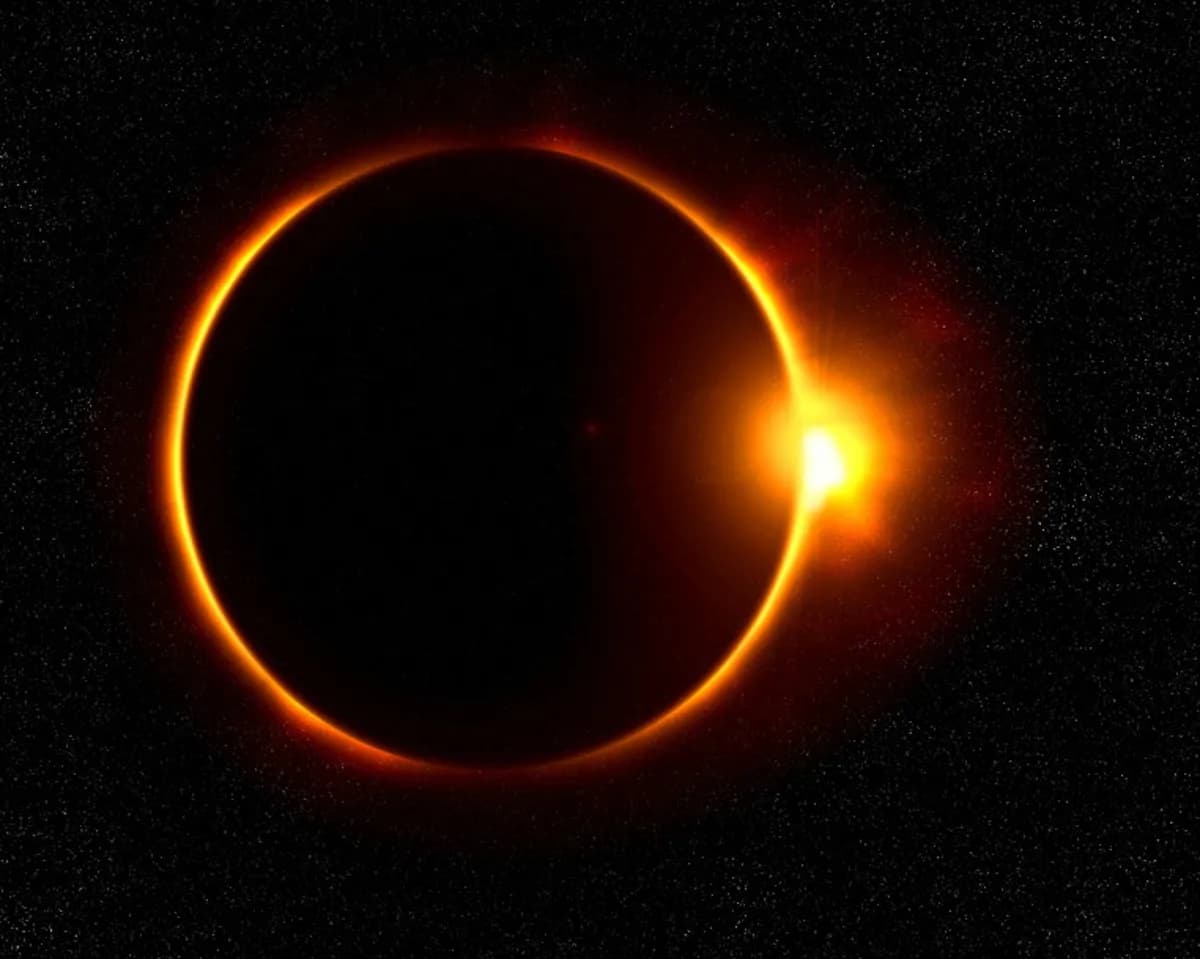
On August 12, 2026, the Moon's shadow sweeps across the Atlantic, clips the coast of Galicia, and races low across northern Spain toward the Balearics before it sets with the sun. This is called the path of totality. For about a minute and forty seconds, somewhere in the corridor between Burgos and Zaragoza, the sky will go dark in the middle of a summer evening, right around 8:30pm local time. And I'm excited to be driving down to be under it and witness my first real Total Solar Eclipse.
This isn't a trip built around one fixed pin on our map. It's a loop: driving south from home, over a legendary Pyrenean pass on my bike, into the eclipse path with room to move if the weather doesn't cooperate, and back home by way of a via ferrata I still haven't picked. Here's the plan, the gear, and why I think a small van is the only sane way to chase something as fickle as a sunset eclipse.
Why a van, not a hotel booking
A total eclipse is a two-minute event that depends entirely on a clear patch of sky in one specific direction - low, to the west-northwest, exactly where sunsets like to grow clouds. Book a hotel in one town three months out and you're gambling on the local forecast for a single evening. (ignoring the fact that the only properties still having availabilities would cost you half a leg). Book nothing, and drive a camper instead, and you can be somewhere else entirely by lunchtime.
That's the whole case for the Volkswagen California Coast I've rented through Goboony. It sleeps, it cooks, and it turns "the western horizon looks better ninety minutes from here" into a normal decision instead of a logistical crisis. Unfortunately, August in northern Spain also means wildfire risk, and smoke does to an eclipse view exactly what cloud does — it just doesn't show up on the weather forecast a week out. Being mobile means I can watch both cloud cover and fire activity right up to the afternoon of the 12th and still make a call.
Sun height and clear horizon
The eclipse happens low in the sky and close to sunset in Spain, so the actual view isn't just about clear skies overhead — it's about a genuinely open horizon to the west. A valley with hills in the wrong place can ruin an otherwise cloudless evening.
The duration in the path of Totality
It varies by location along the path — longer near the centerline, shorter toward the edges — so a small shift in position is worth a real number of extra seconds of darkness.
Weather, decided late
Cloud climatology for the region (Burgos, Palencia, Valladolid tend to have the best August odds) is a starting point, not a forecast. The real call gets made a day or two out.
I've been using an interactive eclipse viewpoint map that scores thousands of spots along the Spanish path by exactly those three factors, plus cloud climatology as an overlay. I'll have a shortlist loaded before I leave, and the van means I can actually act on whichever one looks best that evening instead of being stuck with the one I picked in June.
The route: a pass, a shadow, and a desert
The drive down isn't just transit. On the way south I'm climbing the Col d'Aubisque by bike — 17 km from Laruns, just over 1,200 m of climbing at an average 7%, one of the great Hors Catégorie climbs of the Pyrenees and a road the Tour de France has used more than 70 times. It's a serious detour but should be entirely worth it before the van continues toward Spain.
Camping under the Perseids, the same night
From there it's into the Burgos–Zaragoza corridor for eclipse evening itself — flexible on the exact location in nature until the last realistic moment. Totality there runs to a little under two minutes depending on position, starting with the sun still reasonably high and ending as a genuine sunset eclipse. I actually hope to find a quiet spot where I can keep the van for the night as to enjoy the Perseids in all darkness, because that's another promise for that day!
The days after the eclipse, I'm pointing my gravel bike at Navarra, specifically the Bárdenas Reales — a UNESCO Biosphere Reserve of clay and sandstone badlands that looks more like Utah than Spain, all dry riverbeds and wind-carved formations like the Castildetierra chimney. It's hot, exposed, and genuinely desert-like, so it's a lot of water and an early start, not a midday ride. And I'll definitely be sharing more highlights from there!
On the way back toward Brussels, I still want to fit in a via ferrata — I haven't locked one in yet, but will definitely explore them on our map. The Western Pyrenees and north-central Spain have a decent spread of options along a route home: Peña Karria near Burgos, Urquiza Olmo near Àger, or something further north in the Huesca region, where Canal del palomo Via Ferrata looks very promising. All beginner-to-intermediate, all reachable without a major detour. If anyone reading this has a favorite along that line, I'm still open to suggestions.
My photography setup
I'll be alone for this, shooting solo without anyone to hand gear to mid-eclipse, so the setup has to be simple enough to run single-handed.
The sun itself. my DSLR Canon 5D Mark IV with a 100-400mm telelens and a proper solar filter for every partial phase — the filter comes off only during the brief window of totality, when it's actually safe to look at (and photograph) the corona directly. Word of warning: Never point an unfiltered lens, or your own eyes, at the sun outside totality; certified ISO 12312-2 filters are non-negotiable for both.
The surroundings. My drone (DJI Mini 4 Pro), flown considerately and legally, well clear of anyone else who might be watching from the same spot — the point is the landscape and the shrinking light, not a close-up of the sun itself (drones and solar filters don't mix well anyway).
The shadow. My second Canon camera (borrowed from a friend) left running a timelapse of the wider scene, catching the strange, fast-moving dusk that creeps in during the final minutes of the partial phase — the light drops in a way that doesn't look like a normal sunset, and it's the part most eclipse photos completely miss.
A few quick questions
How long will the total solar eclipse last in Spain?
Around a minute and a half across the Burgos–Zaragoza corridor — about 1m43s in Burgos, dropping to roughly 1m23s in Zaragoza. Spain sits near the tail end of the path of totality, so duration shrinks the further southeast you go along it.
Do I need special glasses to watch it?
Yes, for every partial phase — certified ISO 12312-2 eclipse glasses, no exceptions. The only moment it's safe to look directly at the sun, filters off, is during totality itself, when the disc is fully covered.
Where does the path of totality cross Spain?
It comes in off the Atlantic over the Galician coast, sweeps southeast through the Burgos–Zaragoza corridor, and exits over the Mediterranean toward the Balearics — all in the space of a few minutes, low in the sky, close to sunset.
Why didn't you pick Iceland as the watching spot?
My initial plan was to fly into Iceland and use my gravel bike to travel around. But the chances of overcast and cloudy weather are so much bigger in August, compared to Spain, that I will have to plan an Iceland trip in the future.
Freedom, and using Libelo to find the good stuff
None of this works as a fixed itinerary — the van, the flexible eclipse spot, the still-open via ferrata question, all of it depends on staying loose and reacting to what the road, the weather, and the terrain actually offer. That's the appeal of this kind of trip: you're not locked into a booking three towns away from where you actually want to be.
Along the way, I'll be leaning on Libelo to find the actual sweet spots — viewpoints, trailheads, and lesser-known natural highlights — rather than just following the obvious tourist markers. That matters more than usual on a trip like this, moving through protected landscapes like the Bárdenas badlands and the high Pyrenees: the goal is to pass through lightly, stick to marked trails and tracks, and leave the places I stop exactly as I found them.
Two minutes of totality, a mountain pass, a desert on two wheels, and a via ferrata still to be decided — that's the trip. And most of all: a lot of not yet defined adventures. I'll report back from under the shadow.